
 By Jackson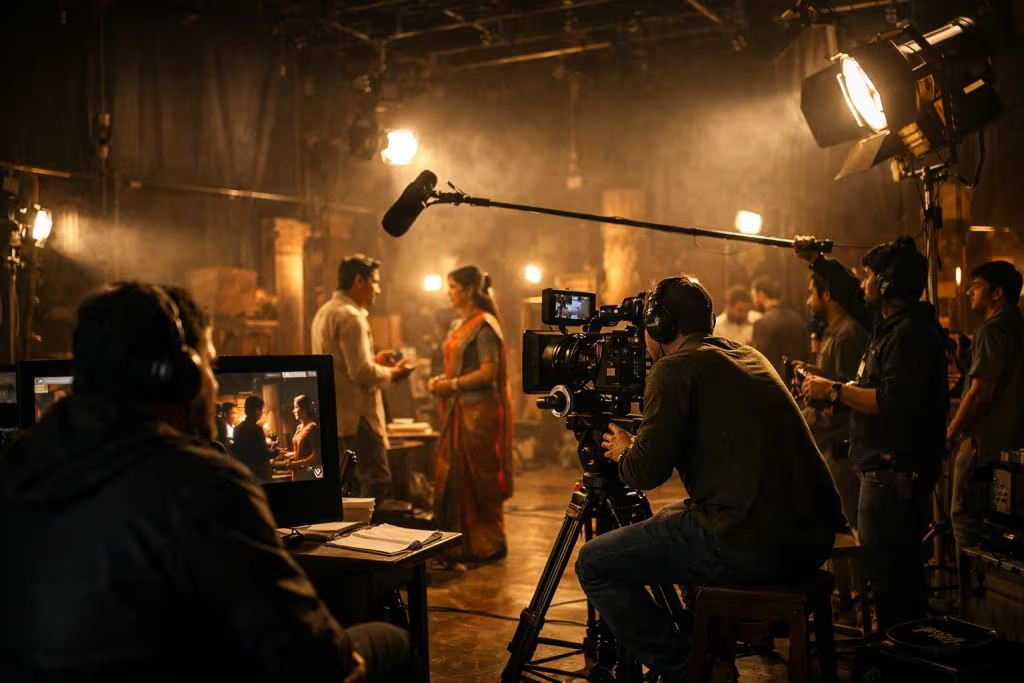
Memorable scenes are often the moments that define great films. Long after the credits roll, audiences may forget certain plot details, but they remember a powerful performance, an unforgettable image, an emotional conversation, or a perfectly timed reveal. Creating these moments requires more than an interesting story. Filmmakers must combine visual language, sound, performance, editing, lighting, camera movement, and storytelling techniques to make every important scene feel meaningful. For anyone exploring filmmaking, understanding these essential techniques can provide a strong foundation for creating scenes that connect with audiences and remain memorable Bardya.
Every memorable scene should have a clear purpose. Before deciding where to place the camera or how to light a location, filmmakers need to understand what the scene contributes to the overall story. A scene might reveal important information, develop a character, create tension, introduce conflict, or deliver an emotional turning point.
Strong filmmaking begins with intention. When every element supports the central purpose of a scene, the final result feels focused rather than random. Even a simple conversation can become powerful when the audience understands what is emotionally at stake.
Visual composition is one of the most important tools in filmmaking. The arrangement of characters, objects, colors, and empty space within the frame can influence how viewers interpret a moment. Filmmakers can use techniques such as the rule of thirds, symmetry, leading lines, foreground elements, and negative space to direct attention.
For example, placing a character alone in a large empty environment can communicate isolation without requiring dialogue. Similarly, positioning two characters on opposite sides of the frame can visually suggest emotional distance or conflict.
Composition should not simply make an image attractive. It should communicate something about the story and characters.
Lighting establishes atmosphere, mood, and emotional tone. A brightly lit scene can create an open and energetic feeling, while shadows and low-key lighting can introduce mystery, fear, or uncertainty.
Filmmakers can experiment with natural light, practical lights, soft lighting, hard lighting, backlighting, and controlled contrast. The choice depends on the emotional objective of the scene.
Color temperature can also influence audience perception. Warm tones may suggest comfort, nostalgia, or intimacy, while cooler tones can create emotional distance or tension. Effective lighting makes audiences feel something before characters even speak.
Camera angles influence how audiences perceive characters and situations. A low-angle shot can make a character appear powerful or intimidating, while a high-angle shot may make the same character seem vulnerable.
Close-ups are especially effective during emotional moments because they allow audiences to observe subtle facial expressions. Wide shots, meanwhile, can establish a character’s relationship with the surrounding environment.
The most memorable scenes often use camera angles intentionally rather than simply following a standard pattern. Every shot should have a reason for existing.
Camera movement can add energy and emotional meaning to a scene. A slow push toward a character can gradually increase tension or emphasize an important realization. A handheld camera can create urgency and instability, while a smooth tracking shot can provide elegance or immersion.
However, movement should support the story rather than distract from it. Excessive or unnecessary camera movement may reduce emotional impact. The best filmmaking uses movement when it enhances what the audience should feel or understand.
Actors are central to memorable scenes. Even the most impressive cinematography cannot compensate for performances that lack emotional authenticity. Directors must help actors understand their characters’ motivations, fears, relationships, and objectives.
Good direction also involves knowing when to allow subtlety. A quiet reaction, hesitation, glance, or change in expression can sometimes communicate more than a dramatic speech.
Filmmakers should create an environment where performers can explore different interpretations while remaining connected to the scene’s purpose.
Sound is one of the most powerful and sometimes underestimated filmmaking techniques. Dialogue, music, ambient sounds, silence, and carefully selected sound effects can transform the emotional impact of a scene.
A distant sound may create suspense before something appears on screen. Silence can make a dramatic moment feel uncomfortable or intimate. Music can reinforce emotion, but filmmakers should avoid using it simply to tell audiences what they should feel.
Well-designed sound gives scenes depth and makes fictional environments feel real.
Editing determines how individual shots become a coherent experience. The timing of cuts can completely change the emotional effect of a scene. Rapid editing can create excitement, confusion, or urgency, while longer takes can encourage audiences to observe performances and absorb emotional details.
Continuity editing helps maintain clarity, while creative transitions can communicate relationships between ideas, locations, or periods of time.
Pacing is particularly important. A scene should not necessarily move quickly just because something dramatic is happening. Sometimes allowing a moment to breathe can make it considerably more powerful.
Memorable scenes frequently make audiences anticipate what will happen next. Suspense can be created by giving viewers information that characters do not have, delaying an important reveal, or introducing a threat that gradually becomes more serious.
Filmmakers can also use framing, sound, editing, and performance to build tension. A character walking toward an unknown location becomes more compelling when the audience senses that something may be waiting ahead.
Effective tension is about controlling information and timing. The filmmaker decides when the audience sees, hears, and understands important details.
Small visual details can give scenes greater depth. A photograph, object, costume, location, or recurring visual motif can represent a character’s memories, relationships, ambitions, or fears.
Symbolism becomes especially effective when it is integrated naturally into the story. Rather than explaining every meaning through dialogue, filmmakers can allow audiences to discover connections themselves.
These details reward careful viewers and can make scenes more memorable after the film has ended.
Strong filmmaking does not rely entirely on dialogue. Characters can communicate through actions, expressions, movement, and their surroundings. Showing a character repeatedly checking an empty phone screen, for instance, may communicate loneliness more effectively than a speech explaining that the character feels alone.
Dialogue should reveal character, advance the story, or create conflict. When visual storytelling and dialogue work together, scenes can become richer and more engaging.
A memorable scene often reflects a filmmaker’s unique creative identity. Choices involving framing, color, editing, sound, production design, and pacing can gradually create a recognizable visual style.
Developing a personal style does not mean making every scene visually complicated. Instead, it means making intentional choices that reflect the filmmaker’s perspective.
Creating memorable scenes requires a combination of technical skill and emotional understanding. Composition, lighting, camera angles, movement, performances, sound, editing, pacing, tension, and visual storytelling all contribute to the audience’s experience. The strongest filmmaking techniques are not used simply to demonstrate technical ability; they are used to communicate character, emotion, conflict, and meaning.
When filmmakers understand why each creative decision matters, ordinary moments can become extraordinary. A carefully framed close-up, a meaningful pause, a subtle sound, or a perfectly timed cut can stay with viewers long after a film ends. Ultimately, memorable filmmaking comes from turning technical choices into emotional experiences that audiences can see, hear, understand, and feel.