
 By Jackson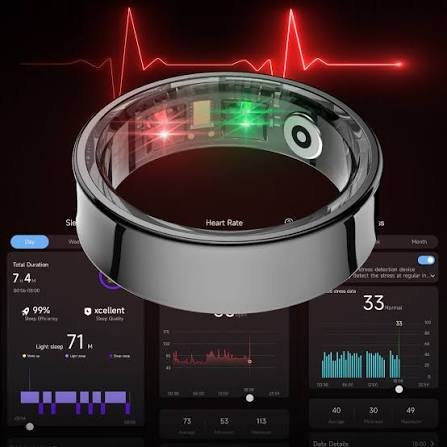
Technology has become an essential part of everyday life, influencing how people communicate, work, exercise, and manage their health. Among the most exciting developments in modern technology is the growth of wearable devices. From smartwatches and fitness trackers to smart rings, connected glasses, and advanced health-monitoring accessories, wearable technology is changing how people interact with the digital world. These compact devices combine convenience, connectivity, and intelligent features to provide useful information directly to users throughout the day.
Smartwatches initially attracted attention because they allowed people to check notifications, track physical activity, and manage calls without constantly reaching for their smartphones. Today, wearable technology has expanded far beyond wrist-based devices. Smart rings, in particular, are gaining popularity because they offer a compact and discreet way to monitor selected health and fitness measurements.
As consumers search for practical and affordable alternatives to expensive technology, products such as the COLMI R09 smart ring have attracted interest. People looking for a budget smart ring with heart rate tracking may find this category worth exploring because it combines a small design with features intended to support everyday wellness monitoring.
Understanding the growing world of wearable tech means examining its major device categories, potential benefits, limitations, and future possibilities.
Wearable technology has developed significantly over the past several decades. Early electronic wearables were relatively simple, often designed for specific tasks such as measuring time, calculating figures, or recording basic activity. As sensors became smaller and wireless connectivity improved, manufacturers began creating devices capable of collecting and displaying more detailed information.
The introduction of modern smartwatches represented an important milestone. These devices brought smartphone notifications, fitness tracking, music controls, and digital applications to the wrist. Users could monitor their daily activities while remaining connected to important communications.
Fitness bands expanded the market by offering simpler, more affordable alternatives. Instead of concentrating on a broad range of applications, many fitness trackers focused on step counting, activity duration, sleep estimates, and heart rate measurements.
Smart rings represent another stage in this evolution. Rather than placing a screen on the wrist, these devices use a compact ring-shaped design to collect selected measurements. Their smaller size appeals to people who prefer lightweight technology without a prominent display.
Wearable technology continues to evolve because consumers increasingly want devices that fit naturally into their routines rather than demanding constant attention.
Smartwatches remain among the most recognizable wearable devices. They connect with smartphones to display notifications, incoming calls, messages, calendar reminders, and other useful information. Depending on the model, users may also respond to messages, control music, access navigation, and interact with voice assistants.
This convenience can be particularly helpful during exercise, commuting, or other situations when using a smartphone is inconvenient. A quick glance at the wrist can provide essential information without requiring users to unlock their phones.
Many smartwatches also support customizable watch faces, downloadable applications, and wireless payment features. These capabilities make them useful for people who want several digital tools in one compact device.
Health and fitness tracking have become major reasons for purchasing smartwatches. Depending on the model, sensors may measure heart rate, estimate activity intensity, record workout sessions, and monitor changes in movement throughout the day.
Some devices also offer blood oxygen estimates, skin temperature measurements, electrocardiogram functionality, or notifications about unusual heart rate patterns. However, these features vary by device, region, and regulatory approval.
Smartwatches can encourage healthier routines by making activity information easier to understand. Users can establish movement goals, review exercise sessions, and observe changes in their daily habits.
Nevertheless, wearable measurements are not always perfectly accurate. They should generally be treated as wellness information rather than a replacement for professional medical evaluation.
Smart rings offer many of the advantages associated with fitness wearables while using a more discreet design. Their compact construction makes them appealing to consumers who dislike wearing a watch or prefer technology that attracts less attention.
A smart ring may include miniature sensors, wireless communication components, a rechargeable battery, and supporting software. Depending on the product, it can track selected measurements related to heart rate, sleep, activity, or general wellness.
The absence of a large display is an important design difference. Instead of presenting information directly on the ring, most models transfer collected data to a compatible smartphone application. Users can then review summaries, trends, and available health metrics.
This arrangement allows manufacturers to focus on a smaller form factor while giving users access to information through their phones.
The COLMI R09 is an example of a smart ring designed for consumers interested in compact wearable technology. It is relevant to shoppers comparing accessible alternatives to more expensive smart rings and traditional fitness watches.
People searching for a budget smart ring with heart rate tracking may consider the COLMI R09 when comparing available features, design, battery performance, and smartphone compatibility.
Before purchasing, consumers should check the current product specifications and confirm which measurements the particular model supports. They should also review compatibility requirements, charging arrangements, water-resistance information, and the availability of the companion application.
Price is only one part of the purchasing decision. A useful wearable should provide understandable information, fit comfortably, and offer features that match the user’s needs.
Smart rings offer several potential advantages. Their small size can make them convenient for everyday use, and they do not require users to interact with a screen throughout the day.
Depending on the model, a smart ring may support overnight monitoring, allowing users to review sleep-related information without wearing a larger device. Its design can also complement ordinary clothing and accessories.
However, comfort depends on proper sizing, and sensor performance can vary. Prospective buyers should check sizing guidance and read independent reviews before making a decision.
Fitness trackers remain useful for people who want straightforward activity monitoring without the complexity of a full smartwatch. Many models emphasize steps, distance estimates, calories burned, workout duration, and sleep patterns.
Their simpler interfaces can make them suitable for beginners who want to understand their daily movement habits. Some fitness bands also provide heart rate tracking and reminders to move after extended periods of inactivity.
Another advantage is affordability. Basic fitness trackers may cost less than feature-rich smartwatches, making them accessible to students, casual exercisers, and consumers who prefer practical technology.
Choosing between a fitness band and a smart ring depends on personal priorities. A fitness band may be preferable for users who want a small screen and visible activity statistics, while a smart ring may appeal to those who prioritize a discreet design.
Smart glasses introduce digital functions into eyewear. Depending on the product, they may include cameras, microphones, speakers, voice controls, or visual information displayed within the user’s field of view.
Some devices focus on hands-free communication and capturing photographs, while more advanced augmented-reality products can overlay digital information onto the surrounding environment.
Potential applications include navigation, workplace assistance, education, accessibility, and entertainment. For example, smart glasses could help workers access instructions without repeatedly looking at a separate screen.
Privacy remains an important consideration because camera-equipped wearables can record information about people nearby. Responsible use requires respecting consent, local laws, and the expectations of others.
Smart clothing incorporates sensors and electronic components into garments or accessories. Some products monitor movement, posture, temperature, or physical performance.
Athletes may use specialized garments to understand movement patterns during training, while researchers explore applications in rehabilitation and workplace safety.
The challenge is balancing functionality with comfort, durability, washing requirements, and affordability. As materials and electronics improve, smart clothing may become more practical for everyday applications.
Beyond consumer fitness products, specialized wearable monitors can support healthcare professionals and patients. Certain devices are designed to record specific health measurements over extended periods, potentially helping clinicians understand patterns that occasional measurements might miss.
Examples include prescribed continuous glucose monitors and wearable cardiac monitoring systems. These products have different purposes, requirements, and levels of medical oversight compared with general-purpose smartwatches.
Consumers should distinguish between wellness devices and medical equipment. A wearable marketed for general health tracking may not be suitable for diagnosing or managing a medical condition.
Wearable devices use different sensors to collect information about the body and its movements. Optical heart rate sensors commonly use light to detect changes in blood volume beneath the skin. Motion sensors help identify movement, estimate steps, and recognize certain activities.
Other devices may include temperature sensors or additional components designed to support particular measurements.
The collected data is processed by onboard software or a connected smartphone application. Algorithms interpret sensor readings and convert them into information such as activity summaries, heart rate trends, and sleep estimates.
The quality of these results depends on sensor design, software, placement, movement, and individual differences. A device that performs well during ordinary activity may produce less reliable readings during intense exercise or when it fits poorly.
Wearable technology becomes more useful when people understand how to interpret its information. Rather than concentrating on a single reading, users can look at patterns over time.
For example, activity summaries may help someone identify periods of inactivity and make room for regular movement. Sleep estimates may encourage consistent routines, although wearable sleep classifications are not equivalent to clinical sleep assessments.
Heart rate measurements can provide context about activity and recovery. However, a single reading should not automatically be interpreted as evidence of a health problem.
The purpose of everyday wearable monitoring is to support awareness and informed decisions, not to create unnecessary anxiety about normal variations.
The best wearable depends on what the user wants to accomplish. Someone who needs smartphone notifications, navigation, and workout applications may prefer a smartwatch. A person interested mainly in activity tracking may find a fitness band sufficient.
Consumers who prioritize compactness may prefer a smart ring. Meanwhile, athletes and professionals with specific monitoring requirements may need a specialized device.
Listing essential features before shopping can prevent unnecessary spending on functions that will rarely be used.
Buyers should compare supported measurements, battery life, charging methods, water resistance, application quality, and smartphone compatibility. They should also investigate whether important features require a subscription.
For smart rings, accurate sizing is especially important because sensor placement affects comfort and may influence measurement quality.
Anyone considering the colmi r09 should verify its current specifications through reliable product documentation and compare them with competing models. Product features, prices, and availability can change, so older descriptions may not reflect the latest information.
An inexpensive wearable can be a sensible choice when it meets the user’s requirements. However, the lowest purchase price does not necessarily represent the best overall value.
Battery durability, software support, warranty coverage, replacement availability, and the quality of the companion application can influence the ownership experience.
Consumers should also consider whether a device works reliably without additional paid services. Reading recent user reviews can reveal common concerns about connectivity, sizing, charging, or software performance.
Wearable devices can collect personal information about movement, routines, sleep, and selected health measurements. This information can be valuable, but it also creates privacy responsibilities for manufacturers and users.
Before purchasing a wearable, consumers should review the manufacturer’s privacy policy and understand what information the device collects. It is helpful to check whether data is stored locally, uploaded to cloud services, shared with third parties, or used for advertising and analytics.
Users should choose strong account passwords, install software updates, and review application permissions. Features that are not necessary for everyday use can often be disabled.
Location tracking and camera access deserve particular attention because they can reveal sensitive information about daily routines or surroundings.
Manufacturers can build trust by explaining their data practices clearly and providing meaningful controls over personal information. Greater transparency will become increasingly important as wearable technology becomes more sophisticated.
Artificial intelligence is likely to play a growing role in wearable devices. Software may become better at identifying patterns across activity, sleep, and other measurements, offering more personalized summaries and recommendations.
For example, future wearables could provide clearer explanations of how daily routines relate to recorded activity patterns. Smart assistants may also make devices easier to control through voice commands and contextual suggestions.
These capabilities must be developed responsibly. AI-generated insights can be incomplete or misleading, especially when based on limited or inaccurate measurements. Clear explanations and appropriate safeguards will remain essential.
Battery technology is another important area of development. Consumers want devices that operate for longer periods without frequent charging.
Improvements in energy-efficient sensors, processors, wireless communication, and battery design could make wearables more convenient. Smaller components may also allow manufacturers to create lighter rings, thinner watches, and more comfortable smart clothing.
Progress will depend on balancing device size, performance, durability, and cost.
Future wearables may work more seamlessly with smartphones, home devices, healthcare platforms, and workplace systems. A smartwatch could coordinate with a home assistant, while a specialized wearable might transfer selected information to an authorized healthcare professional.
Interoperability will be important because consumers often use products from different manufacturers. Reliable integration can reduce fragmentation and make personal technology easier to manage.
At the same time, sharing information between systems must not compromise security or give users less control over their data.
Wearable technology has grown from a collection of basic electronic accessories into a diverse ecosystem of connected devices. Smartwatches provide communication and fitness tools, fitness trackers simplify activity monitoring, smart glasses introduce hands-free digital experiences, and smart clothing explores new ways to measure movement and performance.
Smart rings add another option for consumers who want compact technology with selected wellness features. For shoppers exploring a budget smart ring with heart rate tracking, the COLMI R09 is one product worth researching alongside alternatives, with careful attention to verified specifications, comfort, compatibility, and overall value.
Ultimately, the best wearable is not necessarily the most expensive or feature-rich model. It is the device that fits comfortably into everyday life, provides useful information, respects personal privacy, and meets realistic expectations.
As sensors improve and artificial intelligence becomes more integrated into consumer technology, wearable devices are likely to become increasingly capable. Their greatest value will come from making technology more convenient, helping people understand their routines, and supporting informed decisions without replacing professional judgment where it matters.