
 By Jackson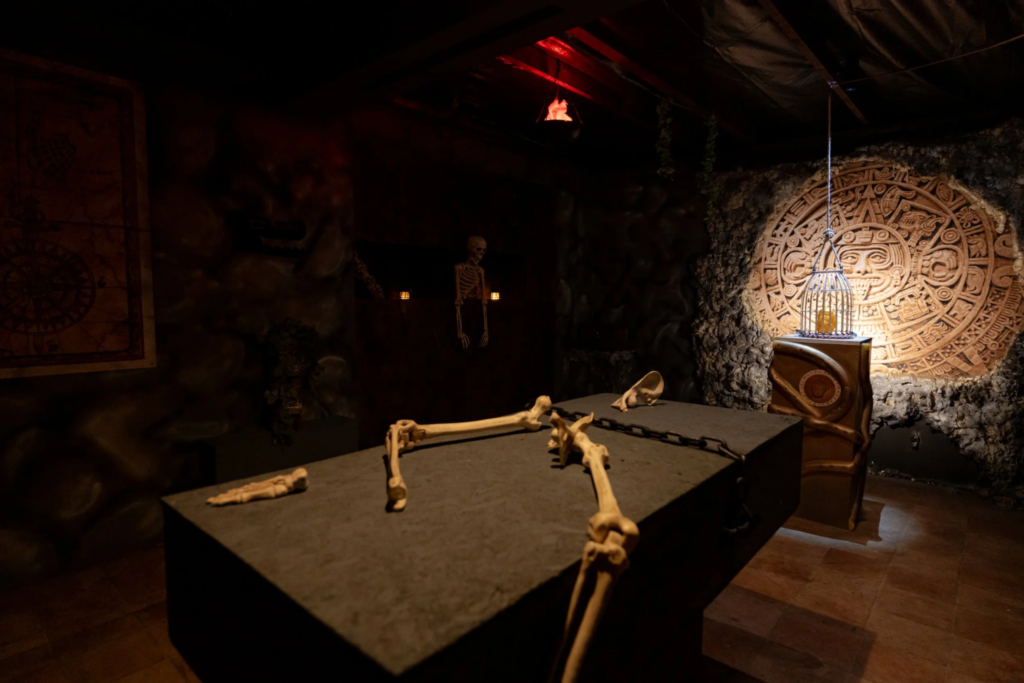
In today’s fast-paced professional and educational environments, traditional team-building exercises like trust falls and awkward icebreaker questions often fall short. Modern teams require dynamic, engaging experiences that challenge their cognitive abilities while fostering genuine collaboration. Enter the escape room phenomenon. What began as a niche form of entertainment has transformed into a globally recognized tool for corporate development, educational enrichment, and social bonding.
An escape room is an immersive, real-life adventure game where players are cooperative participants locked in a themed room. To escape within a set time limit—typically 60 minutes—players must discover clues, solve complex puzzles, decode ciphers, and accomplish various tasks. Beyond the thrilling narrative and adrenaline rush, the true value of an escape room lies in how it serves as a high-stakes, low-risk laboratory for human interaction, critical thinking, and collective problem-solving.
At its core, an escape room is impossible to conquer alone. Designed with overlapping puzzles and multifaceted challenges, success requires a collective effort. This structure inherently breaks down barriers and encourages active collaboration in several distinct ways.
In a typical workplace, team dynamics are heavily influenced by corporate titles, seniority, and organizational silos. An escape room completely levels the playing field. Inside the game, a corporate vice president and an entry-level intern face the exact same physical and mental obstacles.
Because the game demands diverse perspectives, the traditional top-down communication style disappears. An intern might notice a hidden pattern on a wall that a manager overlooked, while a quiet team member might figure out the logic behind a difficult numerical sequence. This environment empowers every participant to speak up, demonstrating that great ideas can come from anywhere regardless of organizational hierarchy.
Effective communication is the lifeblood of any successful team, and an escape room tests this skill under time pressure. Players must continuously share information about the items they discover, the locks they encounter, and the theories they develop.
- Active Listening: Players must listen to one another’s ideas, even when time is running out. Ignoring a teammate’s suggestion can lead the group down a dead end.
- Clarity and Conciseness: In the heat of the moment, vague instructions fail. Players learn to convey information clearly and directly to keep the team moving forward.
- Information Sharing: A key element of any escape room is organizing physical clues in a central location and keeping everyone updated on what has already been solved versus what remains open.
Trust isn’t built through theory; it is built through shared experiences and reliance on others. In an escape room, teams are often required to divide and conquer. One subgroup might tackle a visual puzzle while another decodes an audio clue. Trusting that your teammates are handling their assigned task without constant micromanagement is essential for managing the countdown clock effectively. When the final lock clicks open due to everyone’s combined contributions, the resulting sense of shared victory cements a deep bond of mutual trust among participants.
While the social benefits are immense, the cognitive workouts provided by an escape room are equally impressive. The puzzles designed by creators target a wide range of problem-solving disciplines, forcing players to think outside the box and apply critical logic under pressure.
Standard day-to-day work often relies on linear, routine thinking. However, an escape room explicitly rewards lateral thinking—the ability to solve problems through an indirect and creative approach using reasoning that is not immediately obvious.
A clue might present itself as an innocent piece of decor, a line of poetry, or a subtle alteration in lighting. Players must learn to question their initial assumptions, connect seemingly unrelated objects, and look at ordinary items from entirely new angles. This creative flexibility translates directly back to real-world scenarios, helping individuals approach professional bottlenecks with fresh, innovative mindsets.
The ticking clock in an escape room adds an element of excitement and urgency that closely mimics real-world project deadlines. Managing stress and prioritizing tasks under a ticking timer is a crucial life and business skill.
When time is running low, teams must quickly assess which puzzles are most critical, pivot away from unproductive strategies, and maintain calm under pressure. Learning to manage the physiological and emotional stress of a ticking clock within a fun escape room setting helps individuals develop resilience and emotional control when real-life high-pressure situations arise.
From mathematical ciphers to directional locks and pattern recognition, an escape room is packed with logic puzzles that require rigorous analytical thinking. Players must systematically analyze data, test hypotheses, eliminate impossible options, and deduce correct answers. This step-by-step analytical process strengthens critical reasoning skills, encouraging players to rely on evidence and systematic testing rather than impulsive guessing.
To get the most out of an escape room experience for organizational development, the activity should not end when the time runs out. The true learning occurs during the reflection process that follows.
Many corporate facilitators and educators use an escape room as a diagnostic tool. A structured debriefing session immediately after the game allows participants to analyze their team dynamics in a constructive setting. Key questions to explore during a debrief include:
- How did the team organize itself at the beginning of the experience?
- Were all voices heard, or did a few dominant personalities take over?
- How did the group respond when stuck on a particularly difficult puzzle?
- What communication strategies worked best, and which caused confusion?
By examining these questions, participants can identify their collective strengths and pinpoint areas needing improvement, converting their gameplay into practical lessons for the workplace or classroom.
An escape room is far more than an hour of immersive entertainment; it is an unmatched training ground for interpersonal growth, strategic problem-solving, and team cohesion. By placing individuals in a high-engagement, immersive environment where communication, creative thinking, and mutual trust are mandatory for survival, the experience accelerates team bonding in ways traditional methods simply cannot match. Whether you are looking to build a more cohesive workplace culture, sharpen your critical thinking abilities, or simply enjoy a rewarding challenge with peers, stepping into an escape room is one of the most effective ways to unlock your team’s full potential.