
 By Admin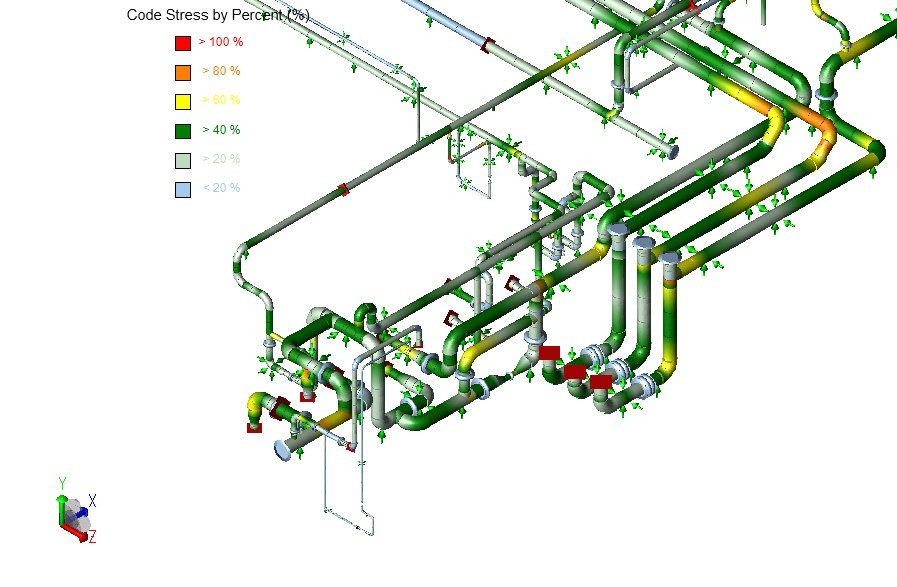
Piping Stress Analysis plays a vital role in the design, safety, and long-term reliability of industrial piping systems. Whether used in power plants, oil and gas facilities, chemical processing plants, or manufacturing industries, piping networks must withstand a variety of operational loads while maintaining structural integrity. A well-executed Piping Stress Analysis ensures that piping systems comply with industry codes, reduce maintenance costs, and operate safely throughout their service life.
Modern engineering projects demand more than simply connecting pipes between equipment. Designers must account for thermal expansion, pressure loads, weight, vibration, seismic forces, wind loads, and equipment nozzle limitations. By following industry best practices, engineers can minimize failures, prevent unexpected shutdowns, and achieve code-compliant designs that perform efficiently under real operating conditions.
Piping systems experience multiple forces during installation and operation. These forces create stresses that, if not properly evaluated, may lead to pipe deformation, equipment damage, excessive vibration, fatigue failure, or leaks.
Piping Stress Analysis is the engineering process of calculating these stresses and ensuring that they remain within the allowable limits defined by applicable design codes such as ASME B31.1, ASME B31.3, or other international standards.
The analysis considers numerous operating conditions, including:
Sustained loads include the weight of pipes, valves, fittings, insulation, and internal fluid along with internal pressure. These loads are continuously present throughout system operation.
Temperature changes cause pipes to expand and contract. Without proper flexibility, thermal growth generates excessive forces on supports, anchors, and connected equipment.
Occasional loads include wind, earthquakes, water hammer, relief valve discharge, and other temporary events that may significantly affect piping performance.
Dynamic forces such as vibration, compressor pulsation, pump operation, and cyclic loading require specialized evaluation to prevent fatigue failures.
Engineering codes provide established guidelines for designing safe piping systems. Compliance ensures that piping systems perform reliably while protecting personnel, equipment, and the environment.
Code compliance offers several advantages:
- Improved operational safety
- Longer equipment lifespan
- Reduced maintenance costs
- Lower risk of leaks and failures
- Easier regulatory approval
- Enhanced plant reliability
Ignoring stress analysis can result in costly repairs, unplanned shutdowns, equipment damage, and serious safety hazards.
One of the most effective practices is integrating stress analysis during the early stages of project design. Early evaluation allows engineers to identify potential issues before fabrication begins.
Making changes during design is significantly less expensive than modifying installed piping systems.
Reliable analysis depends on accurate input information. Engineers should verify:
- Pipe dimensions
- Material properties
- Operating temperatures
- Design pressures
- Fluid densities
- Support locations
- Equipment nozzle data
- Insulation weights
Incorrect input values can produce misleading analysis results and unsafe designs.
Every piping system operates under multiple conditions. Engineers should evaluate:
- Normal operating condition
- Startup
- Shutdown
- Hydrostatic testing
- Emergency shutdown
- Maintenance condition
Each operating scenario may produce different stress levels requiring independent verification.
Pipe supports are critical components that control movement while maintaining structural stability.
Common support types include:
Rigid supports prevent vertical movement and carry the pipe’s weight.
Spring supports accommodate vertical displacement caused by thermal expansion while maintaining consistent support loads.
Guides control lateral movement while allowing thermal expansion in the desired direction.
Anchors completely restrain pipe movement and transfer loads to structural members.
Proper support spacing minimizes pipe sagging and reduces stress concentrations.
Thermal expansion is one of the leading causes of piping stress problems.
As operating temperatures increase, pipes naturally expand. If restrained, expansion creates large forces that can damage:
- Pumps
- Compressors
- Heat exchangers
- Pressure vessels
- Pipe supports
- Structural steel
Engineers often improve system flexibility by incorporating:
- Expansion loops
- Expansion joints
- Flexible routing
- Spring hangers
- Proper guide spacing
Managing thermal growth effectively extends equipment life and reduces maintenance.
Equipment manufacturers specify maximum allowable nozzle loads for pumps, compressors, vessels, and turbines.
Excessive piping loads may cause:
- Shaft misalignment
- Seal leakage
- Bearing damage
- Equipment vibration
- Structural cracking
A comprehensive Piping Stress Analysis verifies that nozzle forces remain within manufacturer limits while maintaining overall system flexibility.
Mechanical vibration can gradually weaken piping systems through fatigue.
Common vibration sources include:
- Pumps
- Compressors
- Reciprocating equipment
- Steam flow
- Gas pulsation
- Turbulent flow
Engineers should identify natural frequencies, evaluate resonance potential, and implement vibration control measures when necessary.
Proper support placement and routing significantly reduce vibration-related failures.
Every project should comply with the appropriate piping code depending on its application.
Examples include:
- ASME B31.1 for Power Piping
- ASME B31.3 for Process Piping
- ASME B31.4 for Liquid Transportation Systems
- ASME B31.8 for Gas Transmission Systems
Following these standards ensures consistent engineering practices and regulatory compliance.
Stress analysis should not be considered a one-time activity.
Design reviews should occur throughout:
- Conceptual design
- Detailed engineering
- Construction
- Commissioning
- Plant modifications
Regular reviews help identify design changes that may affect system flexibility or code compliance.
Modern engineering software improves the accuracy and efficiency of stress evaluations.
These programs simulate complex loading conditions, calculate stresses, evaluate support reactions, and verify compliance with applicable codes.
Advanced software also generates comprehensive engineering reports that simplify project documentation and regulatory review.
However, software should support engineering judgment rather than replace it. Experienced engineers must always review results for practical applicability.
Several common mistakes reduce the effectiveness of piping design.
These include:
- Ignoring thermal expansion
- Incorrect support placement
- Using inaccurate operating data
- Neglecting dynamic loading
- Overlooking equipment nozzle limitations
- Failing to review code updates
- Assuming identical operating conditions for all load cases
Avoiding these mistakes significantly improves piping reliability and safety.
A professionally conducted Piping Stress Analysis provides numerous operational and financial benefits.
Organizations gain:
- Increased plant reliability
- Enhanced personnel safety
- Lower lifecycle costs
- Reduced equipment failures
- Improved maintenance planning
- Better operational efficiency
- Longer piping service life
- Higher regulatory compliance
These advantages often outweigh the cost of performing detailed engineering analysis during the design phase.
Engineering technology continues to evolve rapidly. Digital engineering tools, cloud-based collaboration, artificial intelligence, and advanced simulation capabilities are improving the speed and accuracy of piping design.
Three-dimensional plant modeling, finite element analysis integration, digital twins, and automated code checking enable engineers to identify potential issues earlier than ever before.
As industrial facilities become increasingly complex, stress analysis will continue to play an essential role in ensuring safe, efficient, and reliable operations.
Reliable piping systems require careful planning, sound engineering practices, and strict compliance with recognized industry standards. Piping Stress Analysis provides the technical foundation for evaluating thermal expansion, sustained loads, occasional forces, vibration, and equipment interactions before problems occur in the field.
By using accurate design data, selecting appropriate supports, evaluating all operating conditions, verifying equipment nozzle loads, and complying with applicable piping codes, engineers can create systems that deliver safe, efficient, and long-lasting performance. Investing in comprehensive Piping Stress Analysis during the design process not only reduces operational risks but also improves plant reliability, minimizes maintenance costs, and ensures that piping systems remain code-compliant throughout their entire service life.